
Smiles we've created.
Each case below is a real World Smiles patient, used with their permission. Some chose to show their full face. Others asked us to crop tightly to the work itself. Either way, the only thing edited is what's in the frame — never the teeth themselves. No filters. No retouching. No 'after' image taken on a different day under different lighting.
What to look for when you compare a before and after.
Most cosmetic dental work is judged by whether the teeth got whiter. That's the easy part — anyone with a whitening tray can do that. The harder question, and the one that separates a polished smile from a smile that still looks right in twenty years, is whether the underlying design is sound. A prosthodontist is trained to evaluate four specific signals. When you look at any before/after — ours or anyone else's — these are what matter.
Tooth proportions.
The width-to-length ratio of your front teeth. Off by 10% and the smile reads as 'work done.' On by 10% and it reads as 'great teeth.' Most cosmetic complaints trace back to this one number.
Midline alignment.
The vertical line between your two front teeth should match the midline of your face — not your nose, your face. Work that ignores this produces 'something looks off, but I can't say what.'
Gingival architecture.
The shape of the gum line that frames each tooth. A smooth, symmetric scallop reads as natural. A jagged or compensated line reads as work done. Often more important than the teeth themselves.
Lip support and facial harmony.
Do the new teeth support the lip the way the old ones did? Cases that ignore lip dynamics produce flat, aged smiles — even when the teeth themselves are beautiful in isolation.
Full-mouth reconstruction — planned before it was built.
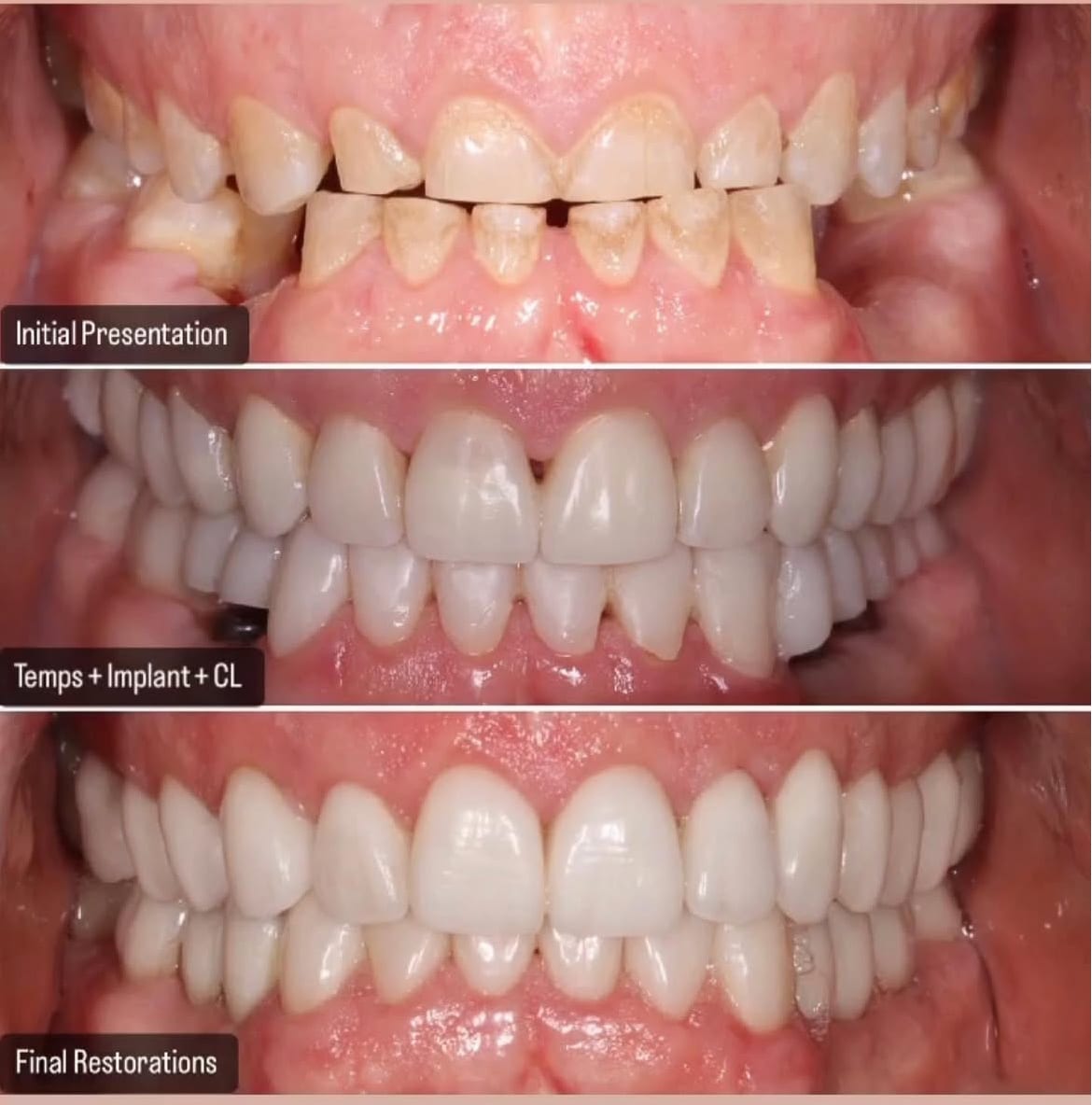
Planning is what makes a complicated implant reconstruction predictable.
Patient arrived with what appeared to be a Class III bite — the lower teeth sitting forward of the upper. The question was whether this was truly skeletal or a Pseudo Class III — a positional issue in how the teeth met, not in the underlying jaw. Cephalometric imaging confirmed the diagnosis: correctable without jaw surgery.
Before any permanent work, an orthotic device was fabricated to test the new bite position and verify TMJ function under load. Once the bite was validated, treatment moved forward: temporary restorations, crown lengthening, and five implants placed. Final all-ceramic restorations were inserted onto the tested and confirmed bite.
Organized by what was done.
Click through any case to read the full story. Photography is straight off the camera — no edits.
Dental Implants
Learn about implants →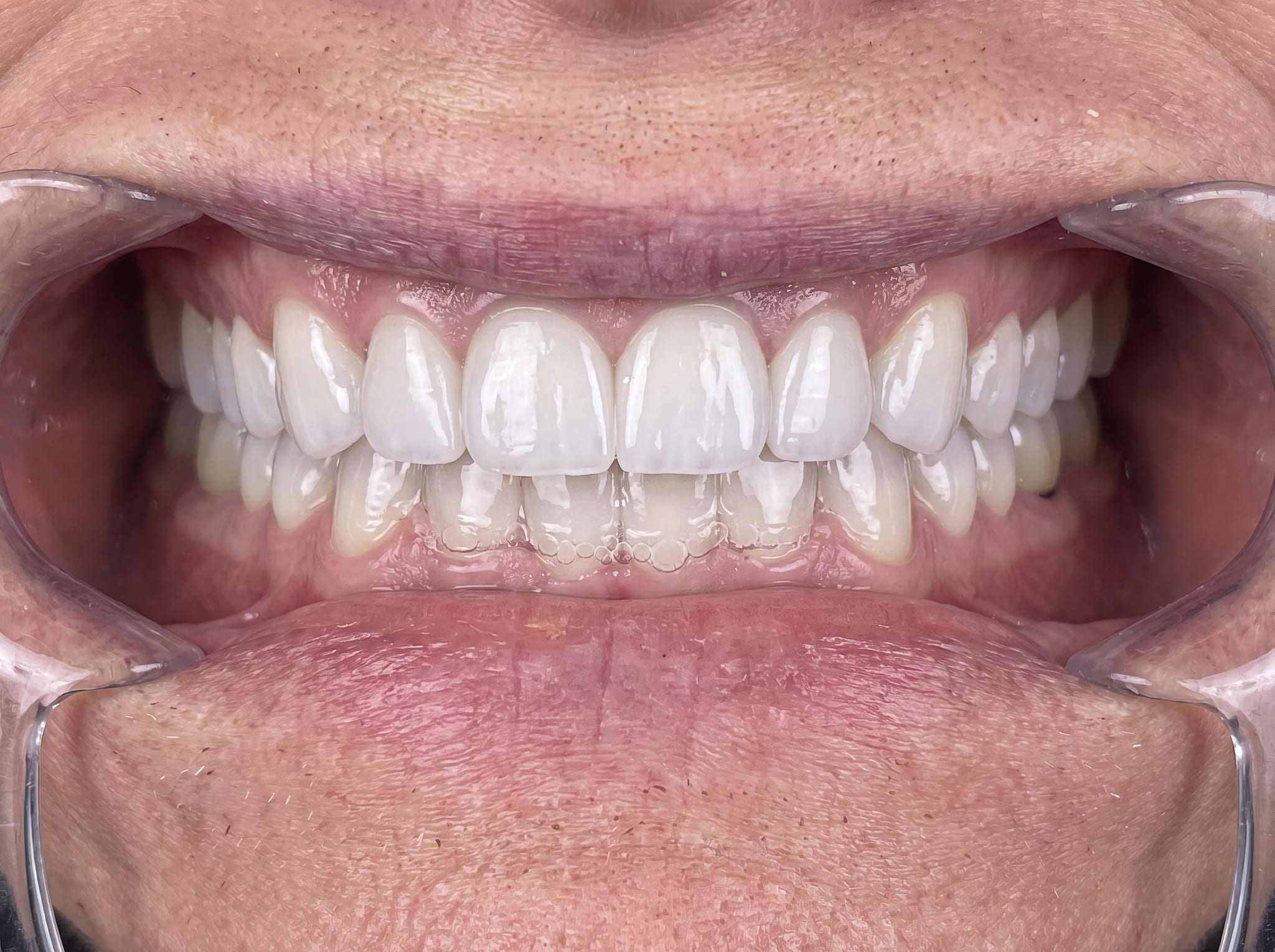
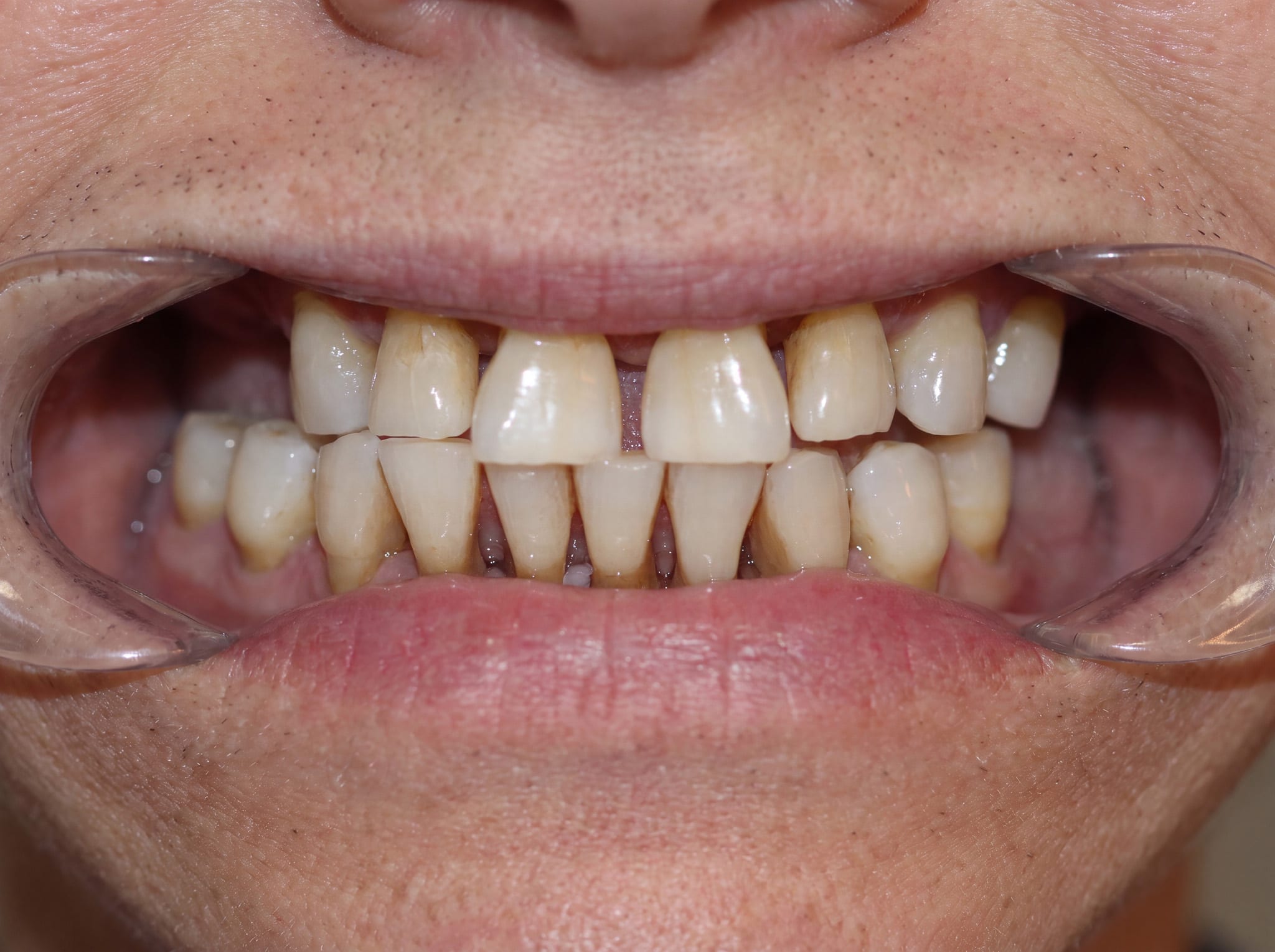
Saving the teeth that could be saved, then placing 7 implants for the rest.
Patient arrived with periodontal disease affecting most teeth — a situation where less specialty-trained dentists often recommend extracting everything and starting over with implants. We took a different approach. Working in coordination with periodontics, we performed bilateral sinus lifts to support upper implants, pocket reduction surgery to treat the underlying gum disease, placed seven implants where teeth couldn't be saved, and restored everything with full-mouth zirconia restorations. The teeth that could be saved were saved. The ones that needed replacement were replaced. Ongoing periodontal maintenance keeps the result stable and our patient happy.
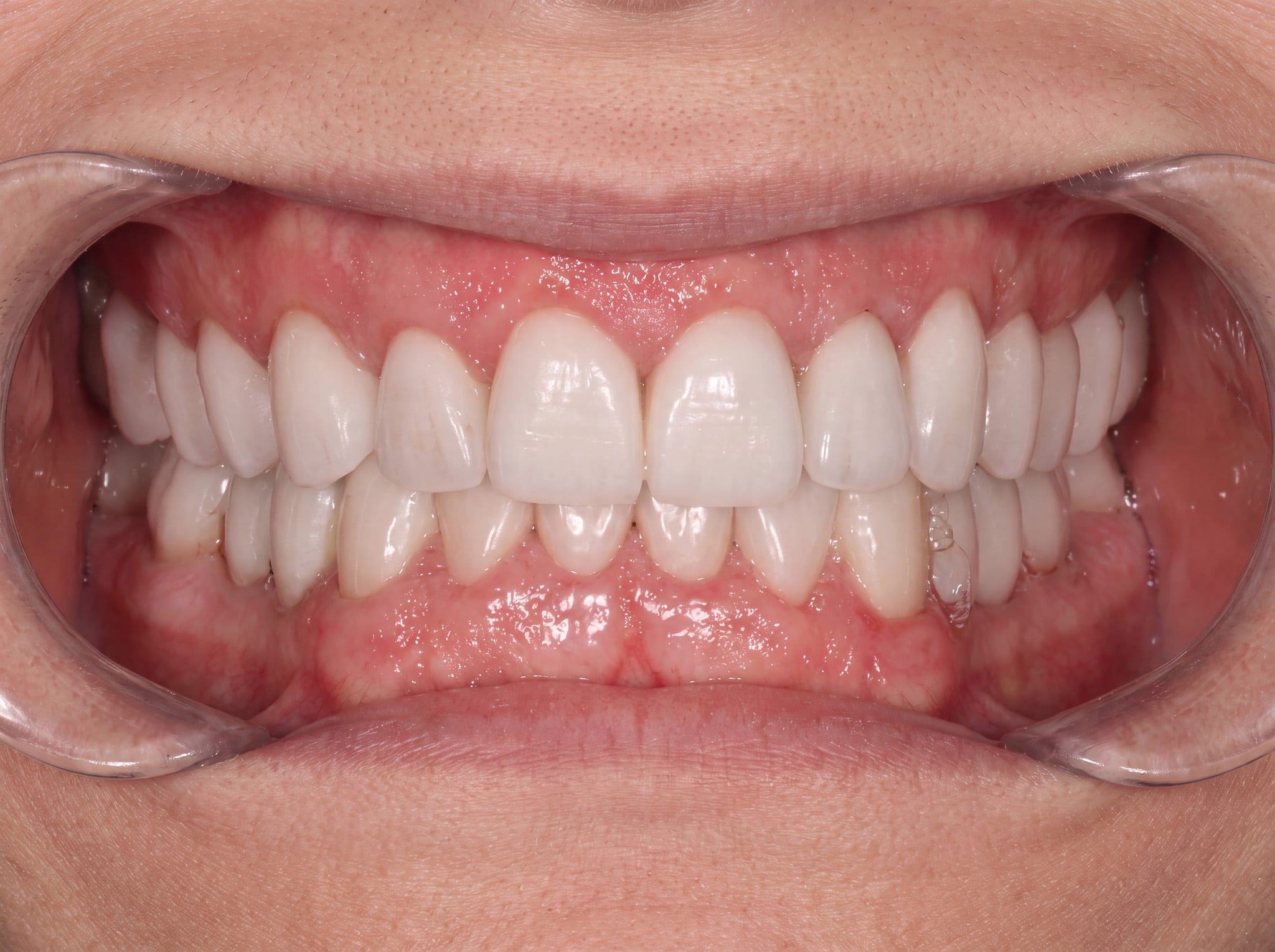
Testing the bite before committing: 5 implants after full TMJ and jaw analysis.
Predictable outcomes in complex cases start with planning that often takes longer than the surgery itself. This patient had cephalometric imaging to evaluate whether their bite represented a true skeletal Class III relationship or a positional one — what's called a pseudo Class III. An orthotic device was fabricated to test TMJ function before committing to permanent restorations. Only after temporary restorations confirmed the planned bite worked was crown lengthening performed and five implants placed. The diagnostic work mattered more than the surgical work.
Porcelain Veneers
Learn about veneers →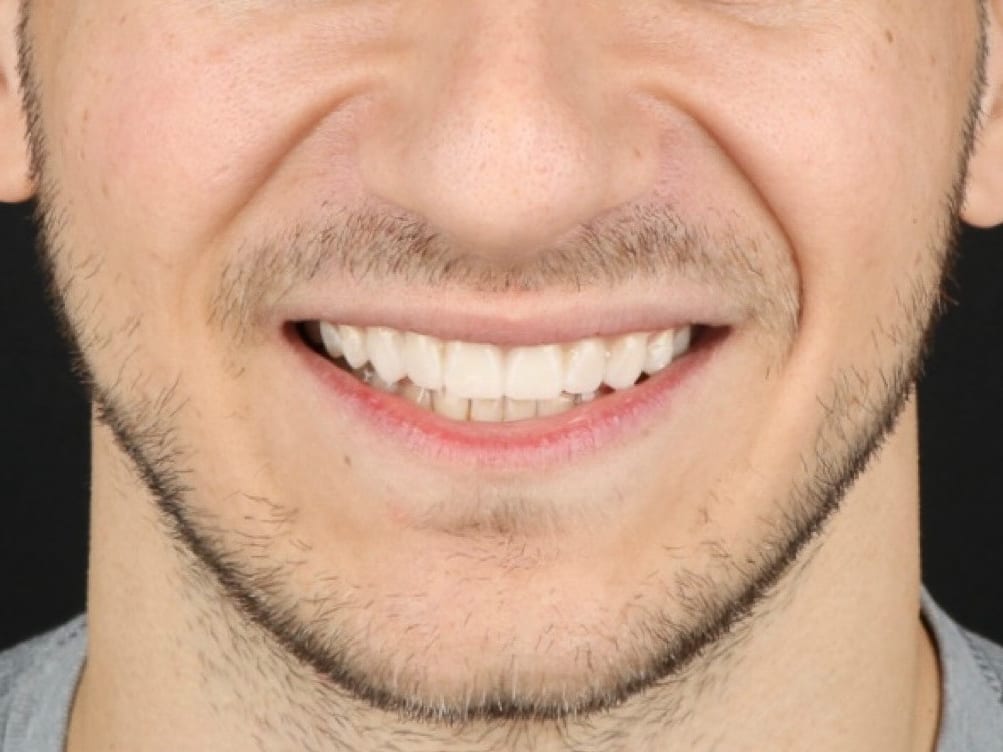
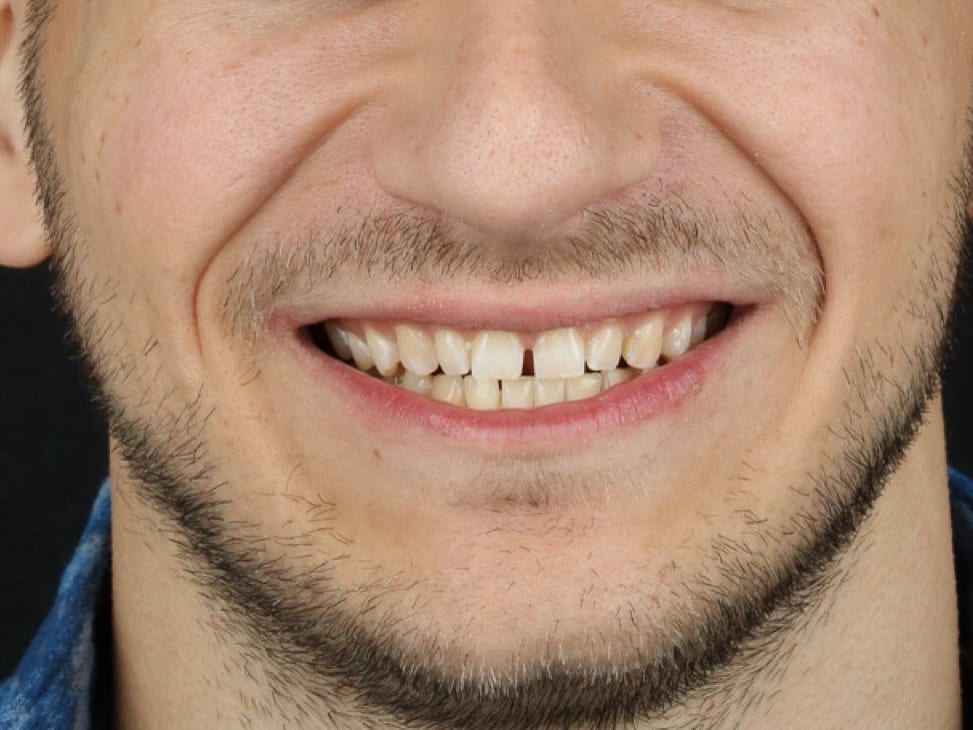
Veneers as full functional reconstruction.
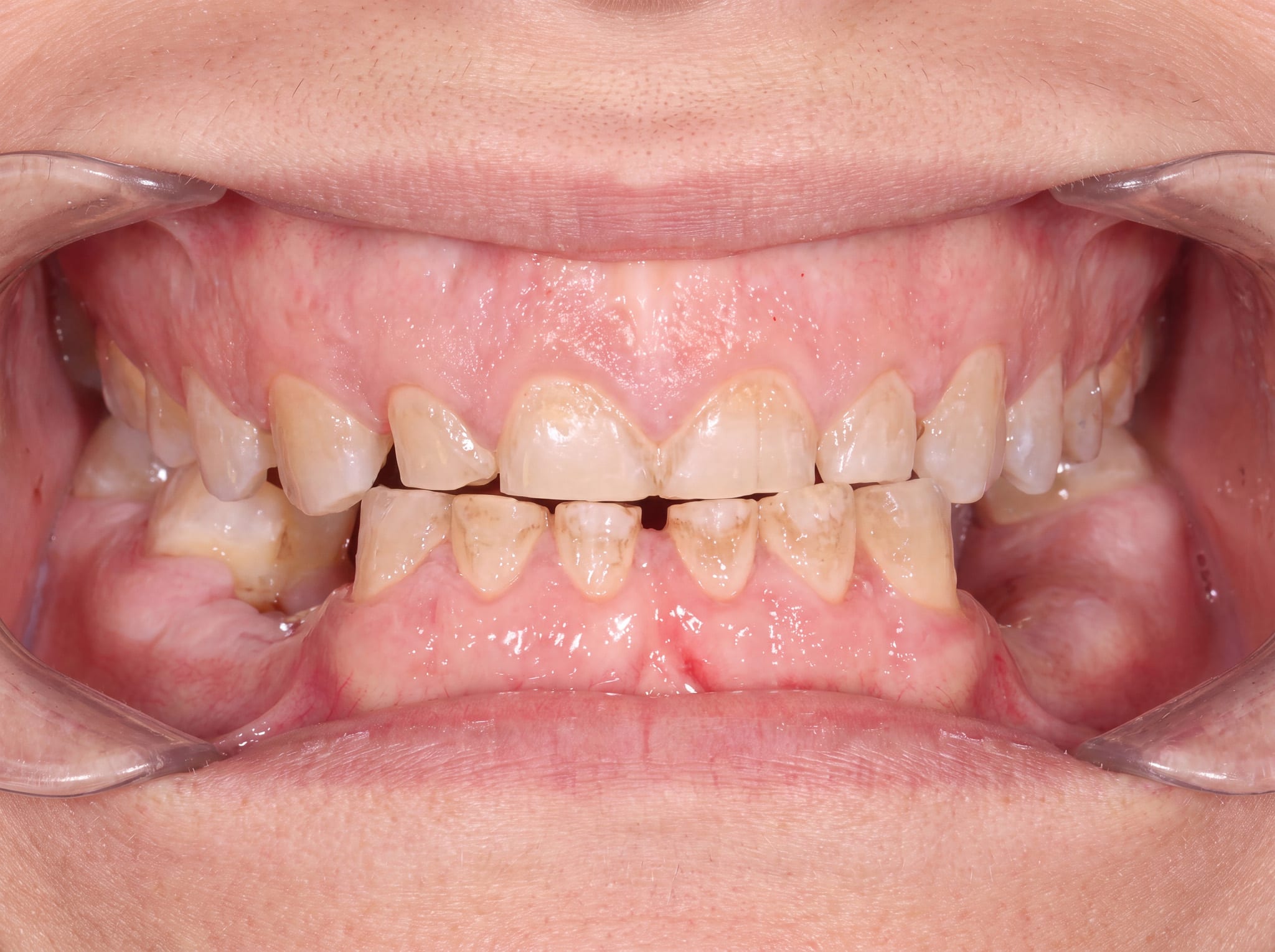
A cosmetic redesign of the patient's smile — and a functional rebuild using all-ceramic veneers as the restorative material. The vertical dimension of the bite had collapsed and needed to be reestablished. The occlusion had discrepancies that needed correction. The patient wanted a redesigned smile. All three goals achieved in a single coordinated treatment using ceramic veneers throughout. Function, bite alignment, and aesthetics addressed together.
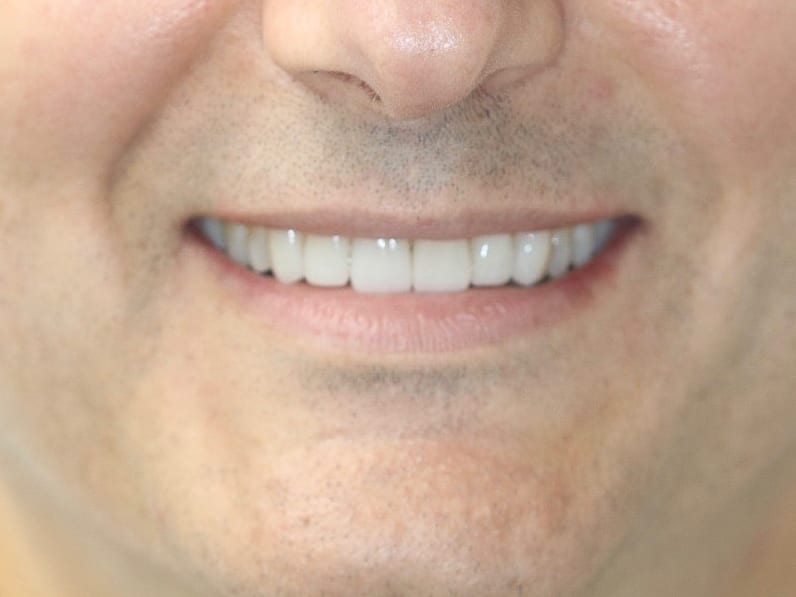
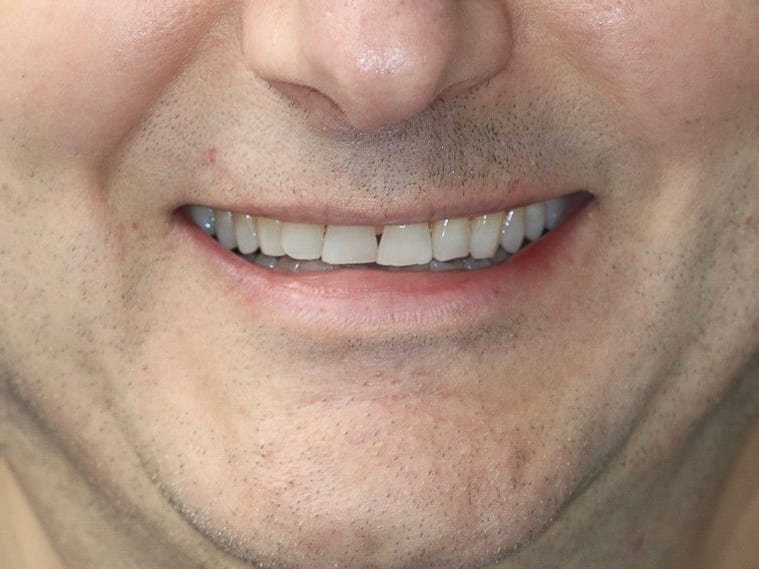
Ten ceramic veneers reversing severe tooth wear.
Years of severe wear had shortened the patient's teeth and lowered the vertical dimension of the bite — a combination that affects both function and how the face holds together at rest. Ten ceramic veneers were designed to restore the lost bite height, return the teeth to appropriate proportions, and rebuild the smile that had been gradually disappearing into worn enamel. Function and appearance restored simultaneously.
Full Mouth Reconstruction
Learn about full mouth reconstruction →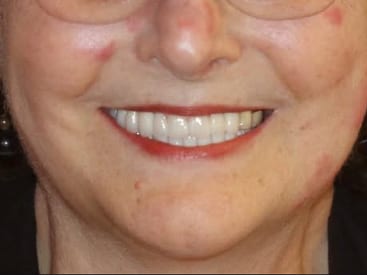
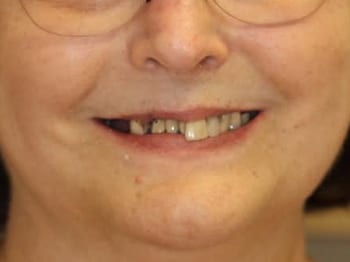
Full mouth reconstruction: 10 implants and a rebuilt bite.
Comprehensive rehabilitation involving bone grafting to support implants, soft-tissue surgery to create proper foundation, and rebuilding the vertical bite dimension that had been lost over years of compromised function. Ten implants were placed across both arches, the upper jaw restored with porcelain-fused-to-metal crowns, and the entire lower arch reconstructed with a full arch zirconia bridge. Function, comfort, and appearance restored across both arches.
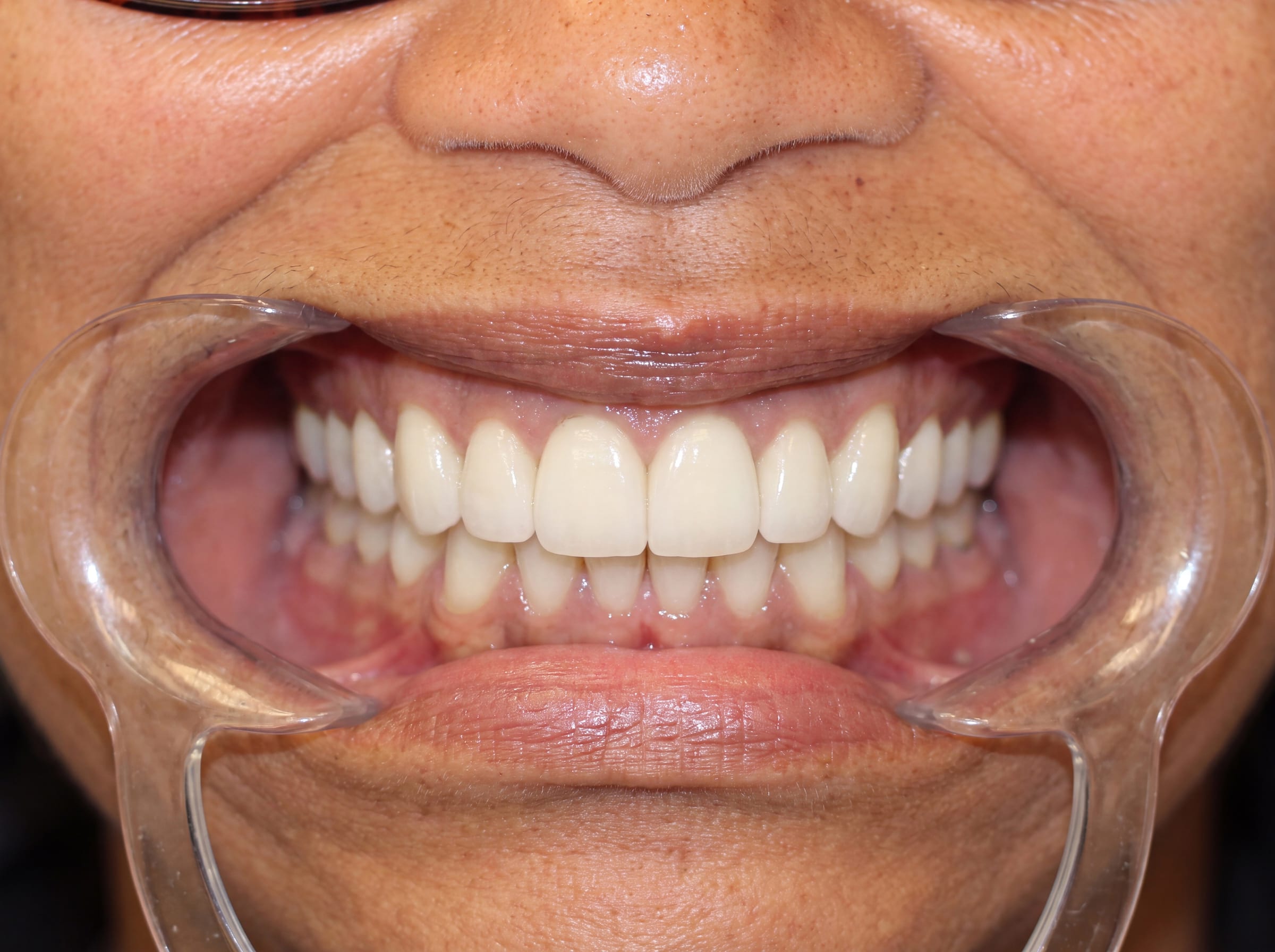
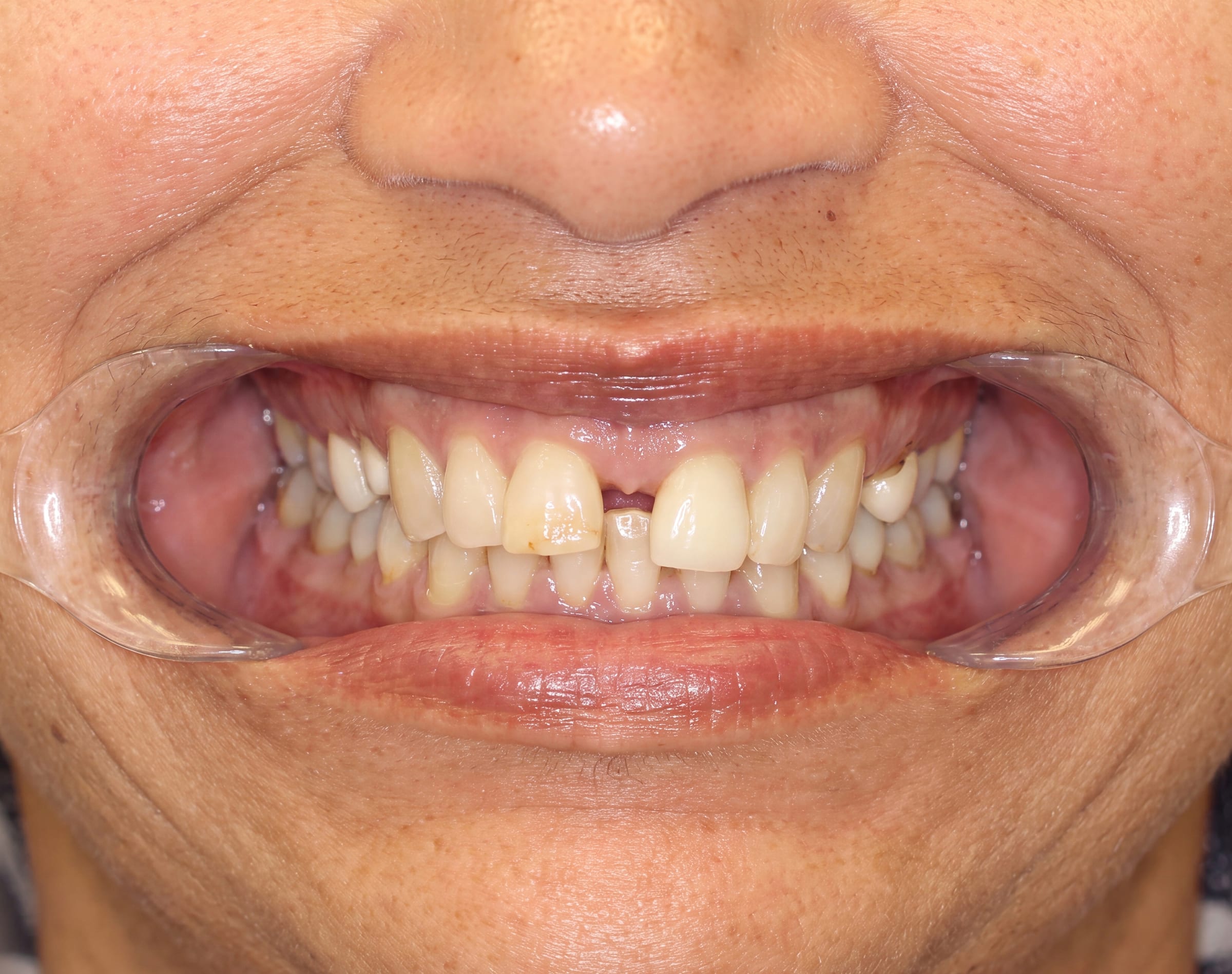
Restoring her bite and closing the front-teeth gap she'd lived with for years.
Patient required comprehensive restoration after years of compromise. Five implants were placed with socket preservation grafting at extraction sites. The bite was rebuilt with a 4-millimeter vertical increase, and the new occlusion was completed with all-zirconia crowns and six lower-front veneers. The technical work was extensive. The harder challenge was closing the gap between her front teeth and managing the proportions to attain the look she'd asked for. One of the most rewarding cases we've completed.
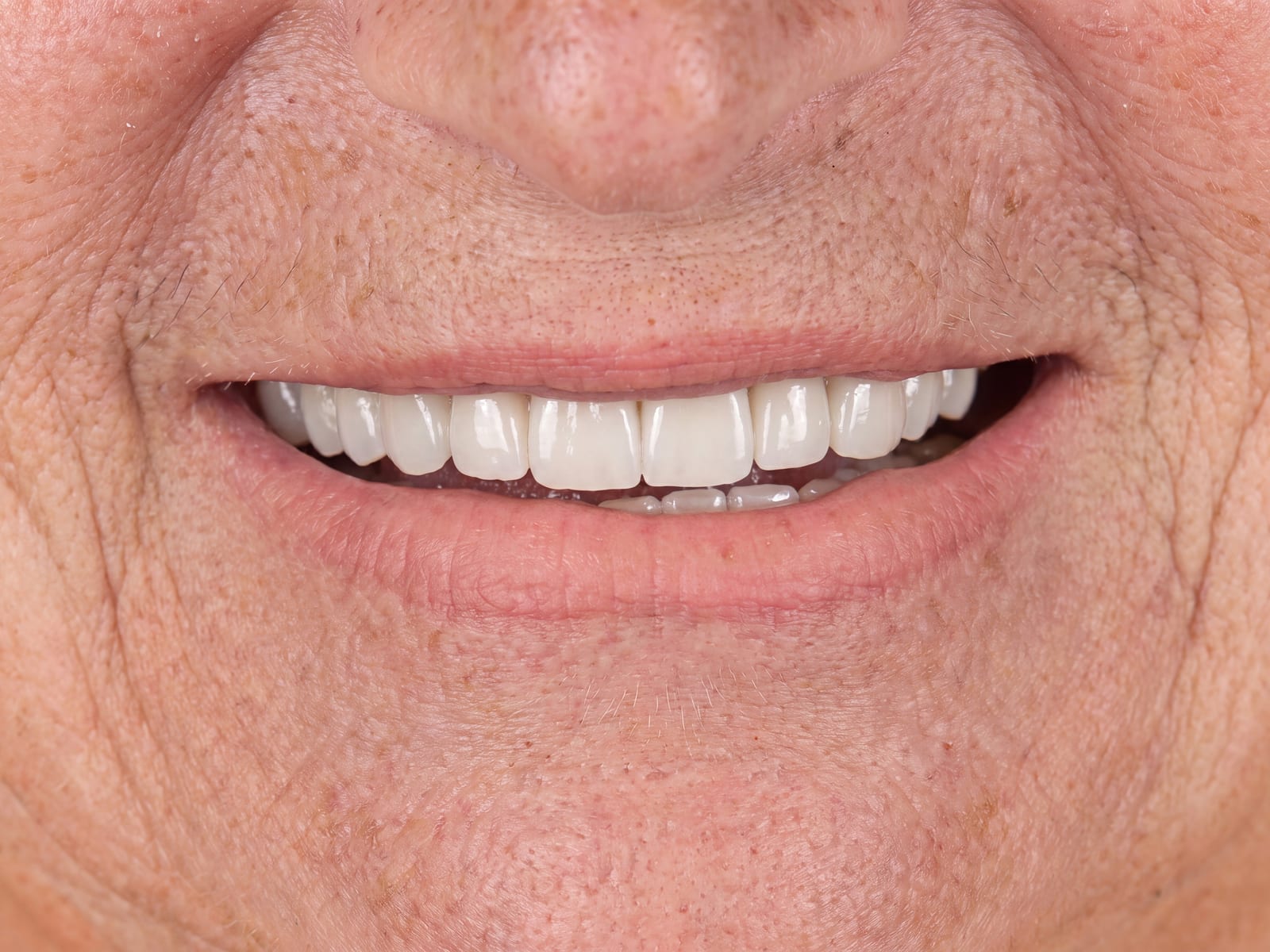
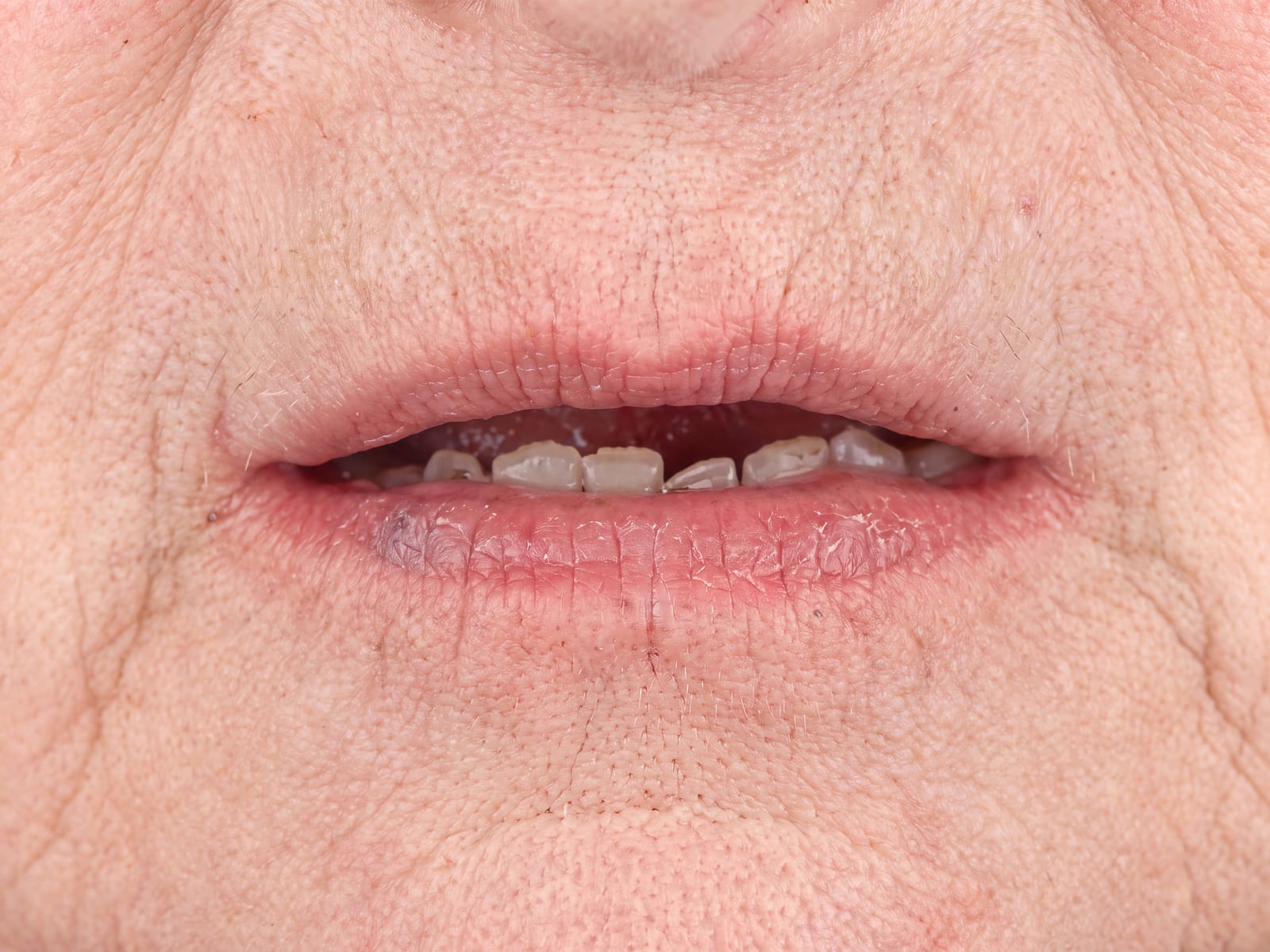
All-ceramic rehabilitation — smile designed first, then executed.
Worn dentition with a collapsed vertical dimension and a drifted occlusal plane. The final smile was designed first, then the occlusion and jaw position were rebuilt to support it. All-ceramic crowns placed across the arch, executed in the validated aesthetic position.
See your own before & after first.
Every case above is someone else's outcome. Useful for understanding what's possible, but not the same as seeing your own face.
The Specialist Second Opinion Session includes a preview of what your own smile could look like — built from a 3D scan of your mouth and modeled in the same software we use to design the final restoration. You see your own face, with the proposed work, before any commitment to start.
The work, in their words.
"He perfectly matched the color and texture to my other teeth. He is a perfectionist with great bedside manners. Made me feel comfortable throughout the process."
"The doctor here is unlike any other dentist I've visited. I went to two other doctors and they both told me my tooth must be removed. He did a root canal instead and saved my tooth."
"After decades of paying for expensive dental procedures and being dissatisfied, I was blessed to have found World Smiles."
The next before/after on this page could be yours.
Start with the Specialist Second Opinion Session. Bring whatever quotes or X-rays you have. Leave with a written plan and a preview of your own smile.